


IVY resource network is a place for parents, educators, community and public leaders, and the media to find and share resources, information, and support for youth and how social ideologies can impact, influence, and change their thinking and actions.
IVY’s aim is to build stronger, more resilient systems through mentorship and guidance, and shared knowledge and mutual assistance around mixed and singular ideologies for the protection and preservation of youth.
IVY highlights its problem-solving network as a collective resource for addressing specific questions and challenges, and advocacy and awareness as a prime resource ensuring all contributors and contributions are qualified and vetted.

IVY is a non-profit, volunteer-based service that is administrated by Dr Valarie Findlay; ORCID: https://orcid.org/0000-0001-8319-3642.
Dr. Findlay specializes in ideological violence and social change, and socio-historical research linking ideological themes to social change with the aim of guiding social policy.
Her cutting-edge research updates prior notions and provides a novel analytical concept, ideologically-themed violence, to address the gaps in recent ad hoc definitions, such as mixed, idiosyncratic, and "salad bar" ideologies. Building on her master's research on terrorism legislation and its impact on law enforcement, her findings promote a social policy framework of a government or public institutions.
Memberships past and present include IALEA (Int’l Association of Law Enforcement Analysts), AFCEA (Washington DC), the American Society for Evidence-Based Policing, Canadian Military Intelligence Association (CMIA), Canadian Association for Professional Intelligence Analysts (CAPIA), research fellow for the National Police Foundation (US), Foresight Synergy Network for geo-political and international issues, CATA Alliance, and the Canadian Association of Chiefs of Police eCrimes Committee.

Dr. Lacassagne has researched, written, and provided insights on a variety of ideological positions and movements such as anarchism, social and cultural violence toward First Nations and Metis Peoples, and social constructs such as insider/outsider concepts.
Dr. Lacassagne received her PhD in political science from the Institut d’études politiques de Bordeaux and possesses outstanding academic qualifications in teaching, research and community service, including as a professor at Laurentian University, Vice Dean of the Faculty of Social Sciences and Humanities and Chair of her Department, and most recently Rector of Université de Hearst.
Dr. Lacassagne is fluent in French and English (and with a good knowledge of Russian) and has been a frequent source for media outlets, .
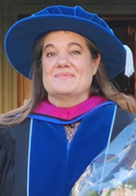
Dr. Brenna Bonn possess a wide area of expertise with youth affected by crime and involved on criminal activities stemming from social movements, ideological groups, and organized crime, such as gangs. Recently retired as a Superintendent from the Waterloo Regional Police Service, where Dr. Bonn dedicated over 31 years to public safety leadership, frontline service, and intelligence operations.
She holds a Doctor of Social Science from Royal Roads University and a Master of Public Safety with a specialization in Countering Crime from Wilfrid Laurier University, in addition to a Bachelor of Arts from the University of Waterloo. She continues her commitment to justice as a professor and coordinator at Conestoga College, where she teaches in the Bachelor of Risk, Threat and Crime Analysis Program and Police Foundations Program.
Beyond academia, Dr. Bonn is the co-founder and vice president of Reach For It, a community program connecting police officers with youth affected by FASD. Her contributions extend across provincial justice strategies, therapeutic court advocacy, and community volunteerism. With a rare blend of operational experience, academic depth, and social insight, Brenna remains a powerful advocate for community-informed justice and equitable policing.